You’ve been staring at Panama Canal cruise listings for three days. You’ve got seventeen browser tabs open. One says $800 per person, another says $4,000, and you can’t figure out if those prices include the same things or even the same ocean. Someone on a cruise forum mentioned needing $500 in cash just to enter Panama, and now you’re not sure if that’s real or a rumor from 2011.
Here’s what I found after pricing out dozens of actual sailings and reading enough cruise reviews to last a lifetime.
What is the average cost of a Panama Canal cruise?
It depends on whether you’re doing a full transit or a partial one, and the difference in price between the two is significant.
A full transit takes you through the entire canal, Atlantic to Pacific or the reverse. These cruises typically run 14 to 21 days because you’re starting on one coast and ending on the other. For 2026 sailings, inside cabins on a full transit start around $1,400 to $1,600 per person based on double occupancy. That’s the basement. A balcony cabin on the same sailing runs closer to $2,000 to $3,500 per person depending on the cruise line and time of year. Holland America’s 22-night Fort Lauderdale to Vancouver run, for example, starts at roughly $1,500 per person for an interior stateroom. Cunard’s Queen Elizabeth does the same route in the $1,400 to $1,600 range.
A partial transit is shorter and cheaper. These are round-trip cruises, usually 9 to 11 days out of Fort Lauderdale or Miami, where you enter the canal from the Caribbean side, pass through the Gatun Locks, and then turn around. You still see a good chunk of the canal but you don’t go all the way through. Partial transits start as low as $600 to $800 per person for an interior cabin on a 10-day cruise.
None of these prices include airfare. And here’s the cost trap most people miss with a full transit: because you board in Fort Lauderdale and disembark in Los Angeles (or vice versa), you’re booking a one-way flight home. If you live on the East Coast and your ship ends in San Diego, that cross-country flight adds $200 to $400 per person to the real cost of the trip.
Drinks, excursions, and gratuities are extra on most lines. Budget another $50 to $100 per person per day for those if you don’t have a drink package.
What is the best month to cruise the Panama Canal?
Panama’s dry season runs from December through April. The rainy season is May through November. Most people are going to tell you to go during dry season, and they’re not wrong, but there’s more to it than that.
January and February have the best weather. Temperatures sit in the mid-70s to low 80s Fahrenheit, the humidity is lower than the rest of the year, and rain is rare. Clear skies make the transit day itself more enjoyable because you’re going to be standing on deck for hours watching the locks. Getting soaked in a downpour during that part would be unfortunate.
December is the sweet spot if you care about price and scenery more than perfect weather. It’s technically early dry season, so you might catch an occasional shower, but the jungle around the canal is at peak green after months of rain. December fares tend to be lower than January or February, and the ports are slightly less crowded because it’s just before the holiday rush.
March and April are dry and warm but also the most expensive months. Spring break crowds push prices up and ports get busier.
May through November is rainy season. Afternoon downpours are common but usually short. The big advantage: prices drop, sometimes by 30 to 40 percent. Ships are less full. If you don’t mind carrying a rain jacket and you can tolerate humidity, the rainy season is a perfectly good time to go. The rain makes Panama’s jungle explode with life, and the Canal operates just fine regardless of weather.
The cruise season itself runs roughly October through April. Very few cruise lines run Panama Canal itineraries during the summer months.
Which Panama Canal cruise is best for seniors?
Holland America. This isn’t a close contest.
The median guest age on Holland America ships is 62. The line was built around longer itineraries, unhurried pacing, and a crowd that prefers a string quartet in the lounge over a foam party on the pool deck. Their Panama Canal sailings run 12 to 21 days, which gives you plenty of sea days to recover between port stops. You’re never being rushed off a ship at 7 a.m. to cram three excursions into six hours.
Every Holland America ship has wheelchair-accessible cabins, elevators with Braille buttons, and accessible tender landings. They have dedicated accessibility coordinators who help with boarding and arranging adapted excursions. The onboard medical facilities are among the better ones in the industry, which matters more on a 16-day cruise than on a 4-day Bahamas run.
Princess is the second-best option. Their ships skew slightly younger than Holland America but still attract a mature crowd. One thing to know: wheelchair users cannot disembark at Gatun Lake for excursions, so if mobility is a concern, ask about specific port accessibility before you book.
Viking is worth considering if budget isn’t the issue. Their ocean ships carry fewer passengers (around 930 versus 2,000+ on Holland America), the demographic skews older, and they include excursions in the cruise fare. Viking’s Classic Panama Canal Passage runs Fort Lauderdale to Panama City. The downside is price. Viking typically costs 30 to 50 percent more than Holland America for a comparable itinerary.
Avoid Royal Caribbean and Carnival for this purpose. Both are fine cruise lines, but the onboard atmosphere on their Panama Canal sailings is louder, younger, and more activity-driven. If you want peace, Holland America is the answer.
Is it worth it to go on a Panama Canal cruise?
Yes, with a caveat. The transit day itself is a genuine once-in-a-lifetime experience. The rest of the cruise is a lot of open water.
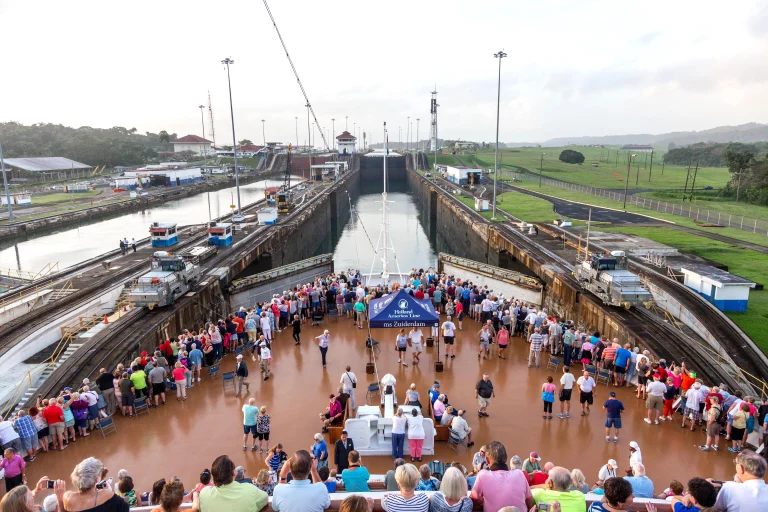
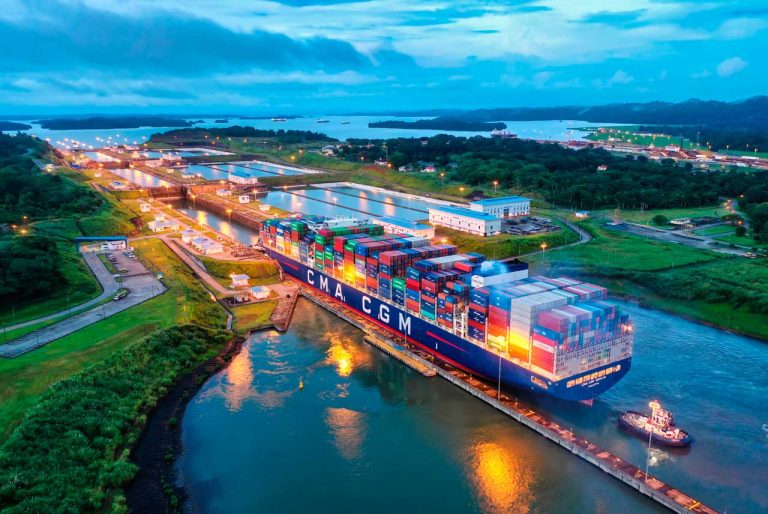
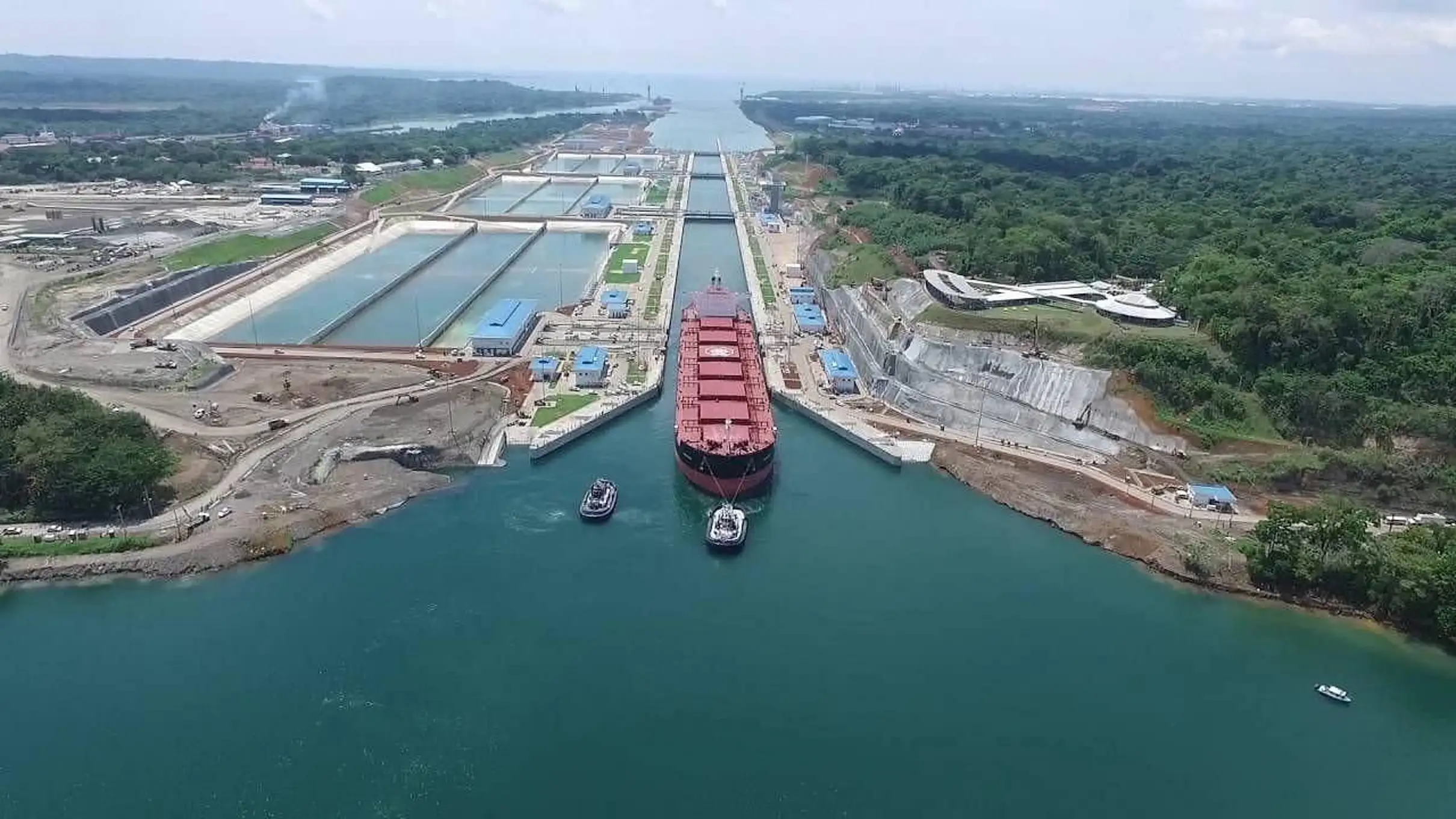
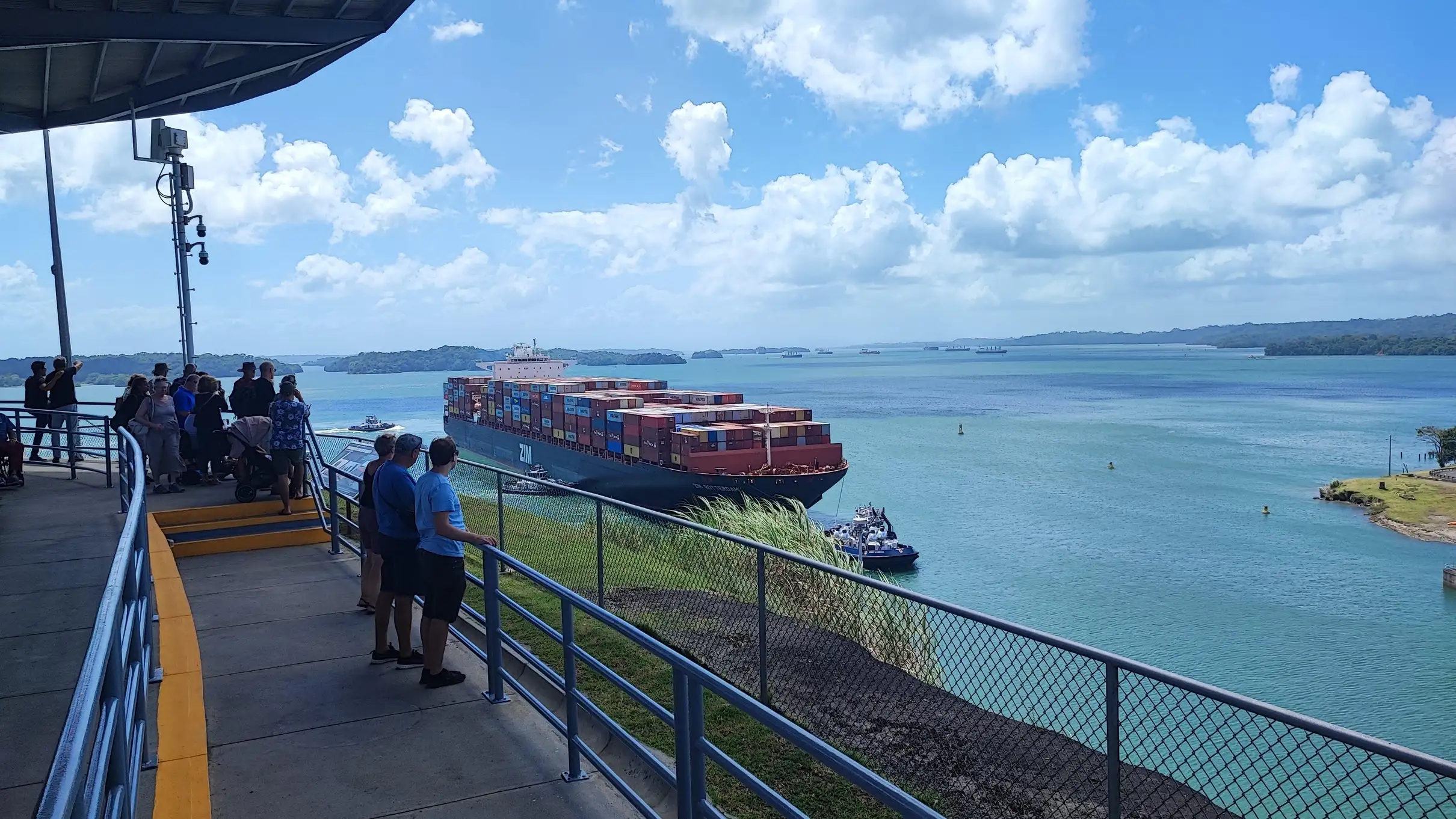
Here’s what the transit day is actually like. Your ship enters the first set of locks around 6 or 7 in the morning. You stand on deck and watch as your enormous ship gets pulled into a concrete channel barely wider than the hull. The walls are close enough to hit with a tennis ball. Water pours in from below, raising your ship 85 feet in three stages. You then sail across Gatun Lake, a 180-square-mile artificial lake that was the largest in the world when it was built in 1914. On the other side, you drop back down through two more sets of locks and emerge into the Pacific Ocean. The whole transit takes 8 to 10 hours.
It’s impressive. The engineering alone would justify the trip for anyone with even a passing interest in how things work. Watching a 100,000-ton ship get lifted by nothing but water pressure in a lock built over a century ago is the kind of thing that doesn’t get old even after you’ve read about it a hundred times.

The caveat: full transit cruises are long, and many of those days are at sea with nothing but ocean in every direction. If you get restless after two consecutive sea days, a 14-day Panama Canal cruise with seven sea days will test your patience. Partial transits are better in this regard. You still see the canal and the locks, but the itinerary includes more Caribbean port stops and fewer blank days staring at the horizon.
The other thing nobody warns you about: on transit day, the best views happen early in the morning. The approach to the locks, the BioMuseum visible at sunrise around 6:40 a.m., the first set of locks filling with water. If you sleep in, you miss the most dramatic parts. Set an alarm.
How many days does it take a cruise ship to go through the Panama Canal?
The canal itself takes about 8 to 10 hours, depending on traffic. You enter the locks on one side in the early morning and exit on the other side before dinner. It’s one day, start to finish.
But that’s just the transit. The cruise that gets you there and back is much longer.
A full transit cruise (passing through the entire canal from Atlantic to Pacific or vice versa) typically runs 14 to 21 days. The ship starts in Fort Lauderdale, Miami, or a West Coast port like San Diego, Los Angeles, or Vancouver. It makes several port stops on the way. You spend one day going through the canal. Then you continue to the other coast with more port stops and sea days.
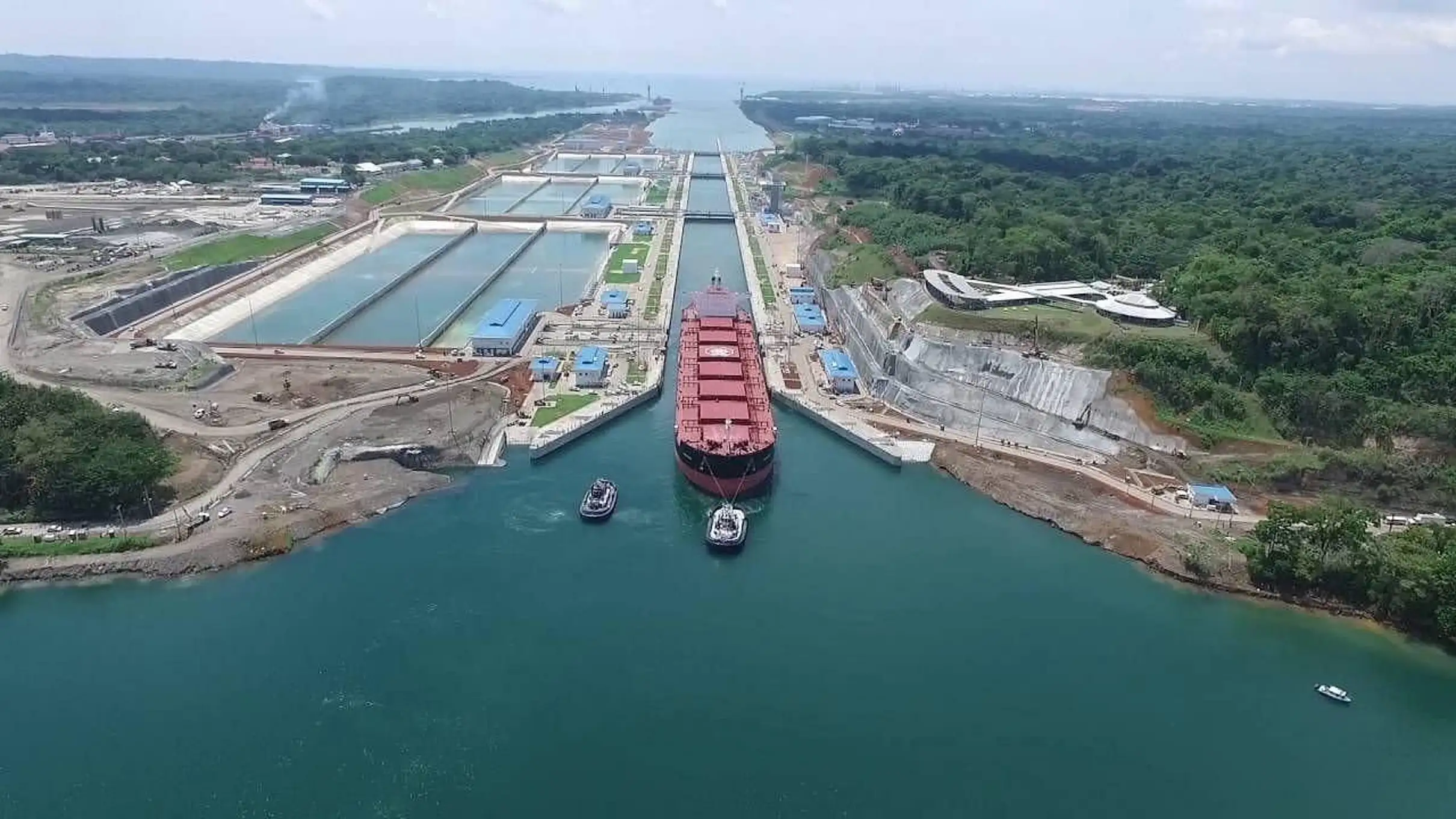
A partial transit cruise (entering the canal from the Caribbean side, passing through the Gatun Locks, and turning back) is shorter. Most partial transits are 9 to 11 days, round-trip from Florida. You still see the locks up close and sail through Gatun Lake. You just don’t go all the way through to the Pacific side.
There’s also a third option most people don’t know about. Some cruise lines offer a one-way “canal passage” itinerary that’s only 7 to 9 days. Viking, for example, runs a Fort Lauderdale to Panama City route that covers the full canal transit in a shorter sailing. The trade-off is fewer port stops along the way.
Do you need $500 to enter Panama?
This one is real, but it’s more complicated than the number suggests.
Panama requires tourists to show proof of “economic solvency” of at least $500 USD. The intent is to verify that visitors can financially support themselves during their stay. This rule applies to anyone entering Panama as a tourist.
The $500 doesn’t have to be cash. You can satisfy the requirement with a credit card, a bank statement from the last three months, traveler’s checks, or a certified bank check. Practically speaking, if you have a credit card in your wallet, you’re covered.
In reality, this gets enforced inconsistently. At Tocumen International Airport in Panama City, immigration officers almost never ask cruise passengers or general tourists to prove they have $500. The requirement is enforced much more aggressively at overland border crossings, especially the crossing from Costa Rica at Paso Canoas. If you’re arriving by cruise ship and only going ashore for a few hours at a port of call, the chance of anyone asking you about $500 is close to zero. You’re entering as part of a cruise passenger manifest, not as an independent traveler clearing immigration.
That said, carry a credit card and a printed bank statement just in case. The one time you don’t bring documentation is the one time they ask. Some nationalities face stricter requirements and may need to show more than $500, so check with your country’s consulate or the Panamanian embassy before you travel if you want to be completely sure.